
Interview Alex Stein
von Larissa Adsiz
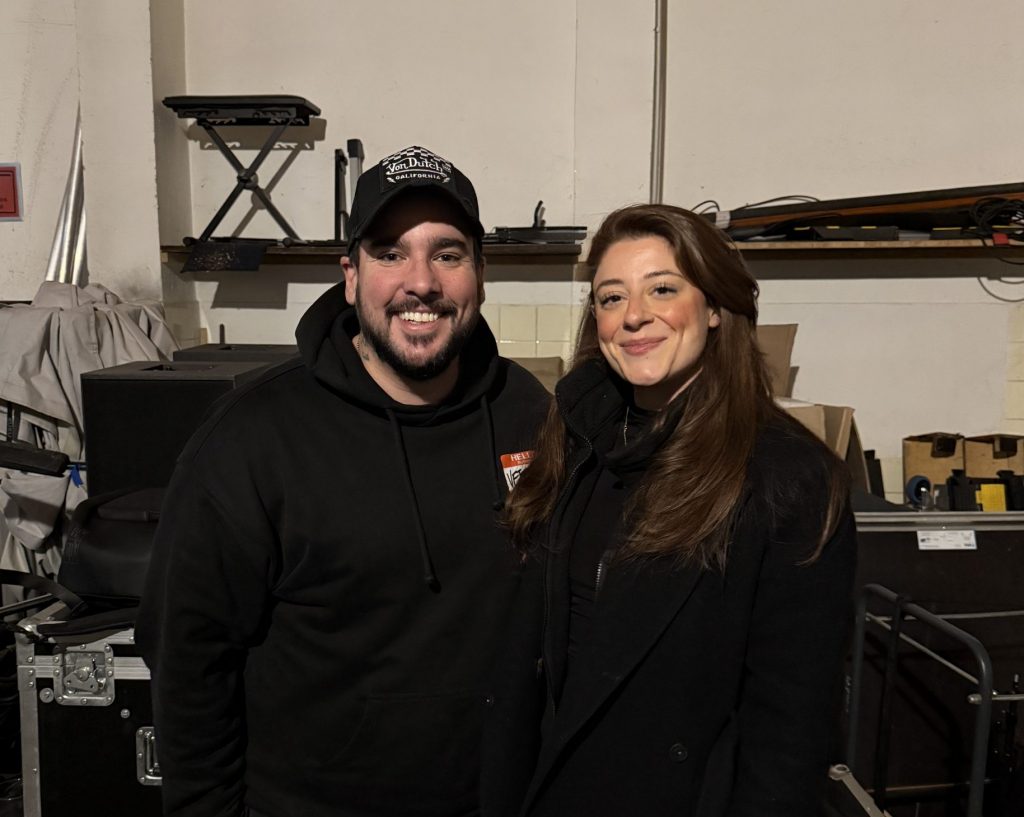
Eine Mischung aus Techno, Psytrance- und Tech-House-Einflüssen, ergänzt durch den Groove seiner brasilianischen Herkunft – so beschreibt DJ und Producer Alex Stein seinen Sound.
Getroffen haben wir ihn beim Colours Event in Frankfurt, kurz nach dem Release seiner Single ‚Full Circle‘ auf Drumcode Records. Im Interview mit Larissa Adsiz aus unserer Musikredaktion gibt er ehrliche Einblicke in die Realität der elektronischen Musikbranche: über kreative Freiheit, den Druck großer Labels, echte Freundschaften im Studio und warum der wichtigste Karriereschritt oft darin besteht, einfach „Schei** drauf“ zu sagen.
Jetzt reinhören.
English version:
It’s great to have you here and that you’ve found the time to talk to us today. Congratulations on the release of your single ‘Full Circle’ two days ago on Drumcode Records. How are you feeling?
Good evening, or good morning, as it’s 3 a.m. I’m definitely happy. I’m also happy to be back in Frankfurt and super happy with the release. Things are actually going really well. The single was in the charts within a day, which I didn’t expect at all. Yes, well, it was a mega weekend. I’m definitely happy.
Very cool. Would you like to say a few words about the song?
Well, I actually started “Full Circle” at the beginning of the year, I’d had the idea for it for a while. I didn’t really have any crazy idea behind it. The idea came to me with the vocals and the baseline. Then I called the track “Full Circle” because I didn’t finish it 100% until July. I actually tested it out for the first time at Boom Festival, which took place in Portugal in July. It’s one of the oldest psytrance festivals in Europe. I’d wanted to DJ there since my early days as a psytrance DJ. And then it was a full circle moment.
If you were to describe your music, how would you summarise it? Especially the development – you’ve been making music for a very long time.
I hate labelling my own music. I prefer to leave that to others. They can give it a name or put it into a genre. In recent years, I have deliberately not tried to commit to a genre, but simply do what I feel like doing. It’s more or less a mixture of techno and psytrance influences and a few tech house things that I also like. I like all kinds of music and am influenced by everything, nothing specific, I have to say. I’m happy when people are happy listening to my music. That’s the most important thing for me.
You have Brazilian roots. Do you think that also influences the music you make or your work? Or is that more secondary? What role does your background play?
It definitely plays a role. I have one foot more in Brazil than in Europe, and I think that’s why I’m so eclectic with my music. Is that even a word? Does it exist in German? I don’t know, otherwise I’ve just invented a word, folks. I thought of the English word ‘eclectic’ because my German isn’t really… although German is actually my mother tongue, but it feels like my third language because I don’t use it often. Damn, what was the question? Now I’ve forgotten it again.
Your roots, whether they have an influence.
That’s right, yes! Yes, Brazil definitely. That’s why there’s a bit of that groove in there, because it’s not so much a four-four thing, but more bunker techno. That’s why I always try to play around with other things a bit. Vocals and stuff. And I think that comes from that side. Definitely.
That makes sense. You didn’t just release this song on Drumcode Records, you released a few tracks before that. Others would say that’s a milestone they’d love to achieve: having their own songs released on a label like that. What does that mean to you? Does it give you more freedom or does it come with more pressure?
That’s a very good question, actually both. For me, it has always been a milestone and will continue to be so. It’s a legendary label that has had a huge influence on my music – and still does. I don’t know, it’s very difficult to explain. When I had my first release there, it was a huge fulfilment. But then it happened very quickly: “Okay, now I’m playing with the big boys and girls. Now I’m in a different league. And then the pressure came very quickly. ‘Okay, now more is expected,’ but actually by no one. No one told me that more was expected, never. But I put the pressure on myself, thinking that now I had to make better music. That’s actually complete nonsense. I then tried to continue producing tracks for the label. A few of them worked, but most didn’t. Until last year, when I said, ‘You know what…’ – Can I swear?
Sure.
You know what? Fuck it, I’m just going to make the music I like. And in fact, I have two more tracks signed with Adam Beyer for next year. So in the end, it’s like this: when I do what I like, things always go better or progress better than when I try to maintain a certain aesthetic or adapt to a label. I think there’s a lesson in that for everyone.
That would have been my next question: what was your strategy for dealing with that? So that means staying true to yourself and not letting yourself be influenced?
You have to think like this: I see how other people try to sound like a certain artist who is already signed to the label, such as Enrico Sangiuliano or Bart Skills. But then you have to ask yourself: Adam Beyer already has Enrico Sangiuliano and Bart Skills on his label. Most label owners aren’t looking for something that already sounds like their own label, but for the next big thing. The best way to sound fresh is to be yourself. Because, of course, you are the sum of all your influences. For example, I am the sum of all the things I hear and think are cool, and I incorporate that into my music. But in the end, only I can do it the way I do it, and that goes for everyone. Everyone is unique and should focus on their authenticity. In the worst case, you’ve made very authentic and cool music, and you can be proud of that. In the best case, you might create something new that other people will copy and that will trigger a new musical wave that usually lasts for years. I experienced this myself when we triggered a huge wave in Brazil with the ‘Brazilian Bass Code’. People were still copying this style years later, and now, ten years on, it’s coming back, which is really cool. So yes, it’s best to just stay authentic. I know most people don’t want to hear that because it’s such an open-ended thing where you can’t say, ‘I have to do this.’ But just trust your good taste in music, because that’s why you started in the first place.
That makes perfect sense. You just mentioned a few names yourself who are also on the label. Another one that comes to mind is Victor Ruiz, a close friend of yours. You’ve produced tracks together and also DJ together. How do you think working with someone you’re close to in your private life influences the creative process?
It just makes the process easier because we were friends before we became music producers. We met 20 years ago at a psytrance party and have been friends ever since. It’s fun. When we first met, we were DJs. But neither of us ever dreamed of working as musicians or artists. Back then, we were just two 20-year-old lads making music in my mum’s basement all evening. We hung out, played Grand Theft Auto, and that was it. Two friends hanging out and making music. And then at some point, it becomes work. But back to your question: it’s great to work with my mate. We have all our studios together in Lisbon: me, him and Wehbba. He’s also an awesome producer and one of my best friends. It’s great to work with these other artists and get direct feedback when I need it. And also to be able to give feedback when they need it. It makes everything much easier and much more fun. It’s also good to have a good mate who is honest with you. Because a lot of people say, ‘Oh, that’s really cool!’ but they’re not being honest and saying, ‘Nah, actually, that sounds rubbish. Do something else.’ And I think that’s also very important: to have someone who is 100% honest with you and isn’t afraid to tell you the truth when something actually sucks – that’s inevitable. Sometimes that’s just the way it is.
Constructive criticism helps you grow, that’s definitely important. Looking back on the year, what was your highlight?
My personal highlight was definitely the Boom Festival. I’ve been waiting for that for 20 years and always wanted to do it. I didn’t expect it to happen at all because it’s actually a psytrance festival. But last year I met one of the founders who said he knew my music and was a fan. I replied, “For God’s sake, please book me! I’m a fan of your festival!” That was really nice, because I hadn’t allowed myself to just be a raver for about ten years. It was always just work, work, work, and the party was also work. And this year was the first time I actually spent three to four days at a festival. I met people and was back on the dance floor, just barefoot on the grass or sand. I had forgotten a little bit why I started in the first place. That’s quite normal when it becomes your job, when pressure, agencies and fans are added to the mix. I needed that personally and as an artist. In general, I think that was the highlight of the year.
Cool! I saw that you give 1-on-1 masterclasses. Can you briefly explain what that is and why you started it? What was your goal?
It was actually a child of the pandemic, when we were all locked down back then. At the time, I was still living in Berlin and had this stupid feeling: What can I possibly teach anyone? That’s actually a silly thought, because you can always teach someone something. There are always people who know more or less than you do. And so I had the idea: Okay, I have time now, let’s give it a try. I didn’t expect anything from it, but it was so much fun that I just kept going. On a much smaller scale than before, because I have less time due to touring and so on, but I still do it today. Once a year, usually in January/February, I offer places and only accept a few people each year. It’s a mentoring programme that covers mixdowns, music production and everything else to do with the music business: how to deal with labels, how to release music, sometimes even label contacts. I try to pass on my experience because I didn’t have that kind of help myself. When we started out, there was no such thing, just a lot of gatekeeping. That means people didn’t want to share their secrets and didn’t help each other. So I thought: why can’t I do things differently, since I didn’t experience that myself? It fills me with joy because it’s great for me to sit in the studio with someone – mostly via Zoom – and watch their mind explode, so to speak, just like mine did back then. You give them a hint and then you see the light come on and they finally understand. That moment is very selfish for me personally, but also cool, and I love it. That’s why I do it. Helping people with this ‘breakthrough’ is just cool. Several of the participants from the last five years – I’ve worked with over 100 people – are signed to medium to large labels, and some are now giving masterclasses themselves, which I think is really great. I’m always happy to help. Anyone who’s interested can go to my website and send me a message. A few times a year, I go through all the emails and reply to the people I think it makes sense to reply to. If someone has just started out, I advise them to invest their money and time elsewhere. They should just make as much music as possible and come back in a few years when they already have a good foundation. Then they’ll make much more progress, much faster. That’s a part of my everyday life as an artist that I love.
So, anyone who’s listening and is interested and already has a bit of experience might want to consider this and get in touch with you when there are slots available. Very cool. Finally, New Year’s is coming up soon. What can we look forward to from you? Do you have any projects in the pipeline?
Oh yes, I have a lot of music planned for next year. I have to admit that I was a bit slow with the music this year. A few other things happened, like my personal life, family, etc. That’s how it is sometimes. Everything is fine, but it just took more time than expected, which was noticeable in the studio. In January, I did a great remix for Monika Kruse, which will be released in February. I’ve also done a few things with Viktor Ruiz – one of the tracks has been signed by Drumcode and will be released in April. I’m releasing an EP with him in March. Later in the year, another EP will be released on Monika Kruse’s label Terminal M. So there will be a lot of music. I think I have seven or eight releases next year. There will be a lot of new stuff, and I’ll be trying out a lot of new things. Don’t be surprised if there’s something different in there. I mean, it’s still Alex Stein, still techno, but I want to try a few new things and see how it goes. I’ll be testing a few of them out today. I’m curious to see what the dance floor thinks.
Nice, we’re curious to hear it! Thank you for talking with us, and I’m looking forward to your set here at Tanzhaus West!
Thank you very much, it was my pleasure. Thanks also to all the listeners who have stayed with us so far and to everyone who has supported my musical journey. Thank you very much for that, I hope you’re looking forward to the new music – I certainly am.